Accurate Process Measurement Starts with Reliable Instrumentation
From new installations and plant upgrades to instrumentation selection and engineering support, we help industrial facilities implement reliable measurement solutions that improve operational visibility and maximise process performance.
industry Experience
Accurate Industrial Instrumentation Delivers Better Operational Decisions
Why Accurate Instrumentation Matters
Every industrial process relies on accurate instrumentation and dependable process data. Whether controlling a chemical reaction, monitoring a water treatment facility or optimising a mining operation, industrial instrumentation provides the accurate measurements required to maintain safe, efficient and reliable plant performance.
The Cost of Poor Process Measurement
When process measurements become inaccurate, delayed or unreliable, the consequences extend far beyond a single instrument. Poor process data can result in unstable production, reduced product quality, unnecessary energy consumption, equipment damage, increased maintenance costs and costly unplanned downtime.
Supporting Intelligent Automation
As industrial operations become increasingly automated and data-driven, the importance of dependable instrumentation continues to grow. Modern plants rely on continuous measurement of flow, pressure, level, temperature and other critical process variables to support automated control systems, maintenance planning and operational decision-making.
Engineering Reliable Instrumentation Solutions
At Proplant PCE, we understand that instrumentation is more than installing field devices. Every instrument plays a vital role in helping operators understand their process, maintain control and improve plant performance. By combining application expertise with high-quality instrumentation and engineering support, we help organisations develop measurement solutions that deliver accurate process information and long-term operational value.
Industrial Measurements We Support
Temperature
Flow
Level
Pressure
Analytical
Electrical
The Operational Benefits of Accurate Process Measurement
How Industrial Instrumentation Supports Process Control
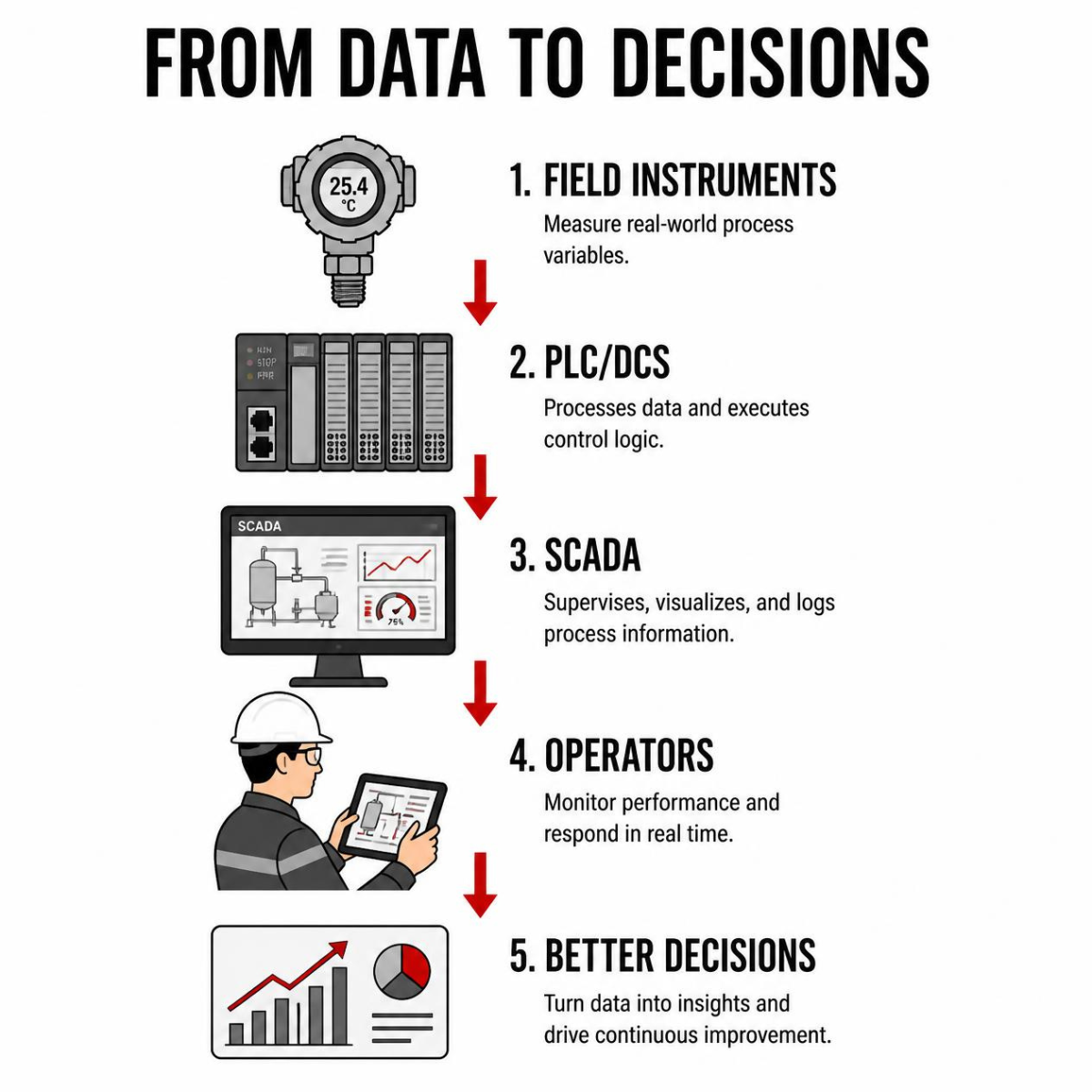
Accurate field measurements provide the real-time data required by PLC, DCS and SCADA systems, enabling operators to make informed operational decisions and continuously improve plant performance.
Need Reliable Industrial Instrumentation?
Whether you're upgrading existing systems or designing a new installation, Proplant PCE provides instrumentation solutions that improve process visibility, reliability and long-term operational performance.
Accurate Process Measurements Drive Better Plant Performance
Industrial Instrumentation is the science and engineering of measuring, monitoring and transmitting information about critical process variables within an industrial operation.
Instrumentation provides the accurate process data required to operate equipment safely, maintain production quality and optimise plant performance.
Using specialised measuring devices, industrial instrumentation continuously monitors conditions such as:
- Flow
- Pressure
- Level
- Temperature
- Non-Nuclear Density
- Position
- Process status
- Equipment condition
These measurements are transmitted to control systems, PLCs, SCADA platforms and operators, allowing industrial processes to be monitored in real time and adjusted whenever operating conditions change.
Without accurate instrumentation, industrial control systems cannot make informed decisions, operators lose visibility into plant performance and process reliability begins to decline.
The Foundation of Every Process Control System
Every automated industrial process begins with measurement.
Before a control system can regulate a pump, adjust a valve or maintain a process within safe operating limits, it must first receive accurate information from field instrumentation.
Industrial instrumentation forms the first layer of every Process Control & Automation system by providing continuous feedback from the process itself.
This information enables control systems to:
Detect process changes
Monitor operating conditions
Trigger alarms
Adjust equipment automatically
Record historical process data
Support predictive maintenance
Improve operational decision-making
Simply put, reliable instrumentation transforms physical process conditions into actionable operational intelligence.
Without it, effective automation is impossible.
WHY INDUSTRIAL INSTRUMENTATION MATTERS
Accurate Measurement Drives Operational Performance
Industrial facilities make thousands of operational decisions every day. The quality of those decisions depends entirely on the quality of the information available.
Reliable instrumentation provides plant operators, engineers and maintenance teams with the accurate process data needed to operate safely, improve efficiency and minimise operational risk.
When instrumentation performs consistently, organisations benefit from greater operational visibility and stronger process control.
When instrumentation fails or produces inaccurate measurements, the impact can be significant—resulting in process instability, unnecessary downtime, increased maintenance costs, safety risks and reduced production efficiency.
01
Improved Process Visibility
Continuous measurement provides operators with a real-time understanding of plant conditions, enabling faster responses to changing process demands.
02
Greater Process Accuracy
High-quality instrumentation delivers dependable measurements that improve process consistency, product quality and operational confidence.
03
Better Operational Decisions
Reliable process data enables engineering, production and maintenance teams to make informed decisions based on actual plant conditions rather than assumptions.
04
Increased Equipment Protection
Monitoring critical process variables helps prevent equipment from operating outside acceptable limits, reducing wear and extending asset life.
05
Enhanced Safety
Accurate instrumentation supports safe plant operation by monitoring critical operating conditions, triggering alarms and helping prevent unsafe process situations before they escalate.
06
Improved Process Reliability
Consistent measurement supports stable control strategies, enabling production processes to operate efficiently while reducing unnecessary process variability.
KEY BENEFITS OF INDUSTRIAL INSTRUMENTATION SOLUTIONS
Reliable Measurement Creates Better Business Outcomes
Instrumentation is often viewed simply as the devices installed throughout a plant. In reality, it is one of the most valuable sources of operational intelligence within an industrial facility.
Accurate, dependable measurements enable organisations to optimise production, reduce risk and make better engineering decisions throughout the lifecycle of their operations.
01
Commercial Benefits
Reliable instrumentation reduces production losses, improves product consistency and supports more efficient use of raw materials, energy and utilities. By minimising process variability and reducing operational inefficiencies, organisations can improve profitability while protecting long-term capital investments.
02
Operational Benefits
Real-time measurement enables continuous monitoring of critical process conditions, providing operators with greater visibility into plant performance and allowing faster responses to operational changes.
03
Reliability Benefits
Accurate instrumentation helps maintain stable operating conditions, reduces unnecessary equipment stress and supports more consistent process control. Reliable measurements contribute directly to improved plant availability and long-term operational reliability.
04
Maintenance Benefits
Modern instrumentation provides valuable diagnostic information that enables condition-based maintenance and faster fault identification. Maintenance teams can detect developing issues earlier, improve maintenance planning and reduce unexpected equipment failures.
05
Safety Benefits
Instrumentation plays a critical role in maintaining safe operating conditions by continuously monitoring key process variables, supporting alarm management and enabling rapid response to abnormal operating conditions.
06
Performance Benefits
Ultimately, Industrial Instrumentation Solutions provide the reliable process information needed to improve production efficiency, strengthen process control and support data-driven operational improvement across the entire facility. Rather than simply measuring the process, effective instrumentation empowers organisations to operate with greater confidence, improve decision-making and achieve long-term operational performance.
INDUSTRIAL INSIGHT
Industrial instrumentation does not control the process—it informs it.
Every reliable control decision begins with accurate measurement. The quality of your process data directly influences the stability of your control systems, the reliability of your assets and the performance of your operation.
This principle is why instrumentation should never be viewed as a collection of individual devices. It is a strategic layer of operational intelligence that underpins process control, automation, maintenance and continuous improvement across the plant.
Engineering Accurate Measurement for Reliable Plant Performance
Accurate measurement is the foundation of every efficient industrial operation. Whether monitoring flow through a pipeline, measuring pressure within a process vessel or maintaining precise temperature control during production, reliable instrumentation provides the operational intelligence needed to keep plants running safely and efficiently.
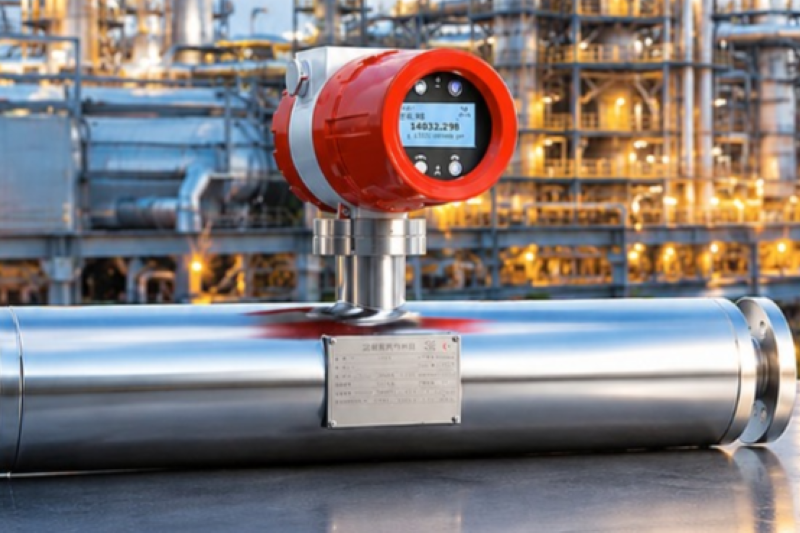
Better measurements lead to better engineering decisions. Better engineering decisions lead to better plant performance.
OUR APPROACH TO INDUSTRIAL INSTRUMENTATION
The Right Instrument for the Right Application
Selecting industrial instrumentation is about far more than matching a specification sheet.
Factors such as process conditions, media characteristics, operating pressures, temperatures, installation constraints and maintenance requirements all influence long-term measurement performance.
Our engineering-led approach focuses on understanding the complete application before recommending a solution.
STEP 01
Process Evaluation
We assess your process, identify the variables that need to be monitored and evaluate the environmental and operational conditions that influence measurement performance.
STEP 02
Instrument Selection
Based on your application requirements, we recommend instrumentation technologies that provide the required level of accuracy, reliability and long-term performance.
STEP 03
System Integration
Instrumentation should integrate seamlessly with existing PLCs, SCADA systems, Distributed Control Systems (DCS) and plant monitoring platforms to ensure reliable communication and operational visibility.
STEP 04
Installation & Commissioning Support
Correct installation is essential for accurate measurement. We provide guidance and engineering support to help ensure instruments are installed, configured and commissioned correctly.
STEP 05
Ongoing Technical Support
As operating conditions change, instrumentation requirements often evolve. We continue to support our clients through troubleshooting, optimisation, replacement recommendations and technical assistance throughout the operational life of their assets.
TYPES OF INDUSTRIAL INSTRUMENTATION
Measurement Solutions for Critical Process Variables
Different industrial processes require different measurement technologies. Selecting the correct instrumentation depends on process conditions, required accuracy, environmental factors and operational objectives.
Proplant PCE supplies a comprehensive range of instrumentation solutions for monitoring and controlling critical process variables.
Flow Measurement
Flow measurement instruments monitor the movement of liquids, gases and steam throughout industrial processes. Accurate flow measurement is essential for production control, batching, chemical dosing, custody transfer, energy management and process optimisation. Typical applications include:
- Water distribution
- Chemical dosing
- Slurry transfer
- Steam systems
- Fuel monitoring
- Process liquids
- Bulk fluid handling
Pressure Measurement
Pressure instrumentation monitors system pressure to protect equipment, maintain process stability and ensure safe plant operation. Pressure transmitters and sensors provide continuous monitoring of pipelines, vessels, pumps, compressors and process systems. Typical applications include:
- Pump protection
- Boiler systems
- Hydraulic systems
- Compressed air systems
- Process vessels
- Filtration systems
Level Measurement
Level instrumentation measures liquid, slurry and solid levels within tanks, silos, hoppers and storage vessels. Reliable level measurement prevents overflow, dry running, inventory losses and production interruptions. Typical applications include:
- Storage tanks
- Chemical vessels
- Water reservoirs
- Sumps
- Silos
- Process vessels
Temperature Measurement
Temperature measurement plays a critical role in maintaining product quality, protecting equipment and ensuring safe operating conditions. Reliable temperature monitoring supports efficient process control across manufacturing, mining, food production, chemical processing and energy generation. Typical applications include:
- Heat exchangers
- Boilers
- Furnaces
- Cooling systems
- Pasteurisation
- Reactors
Non-Nuclear Density Measurement
Non-Nuclear Density measurement enables operators to monitor product concentration, process consistency and material quality in real time. It is widely used in mining, mineral processing, chemical production and slurry applications where product quality depends on accurate density control. Typical applications include:
- Mineral processing
- Slurry pipelines
- Chemical blending
- Product quality monitoring
- Concentration control
Control Valves & Actuation
ontrol valves are the final control element in many industrial automation systems. Working alongside PLCs, DCS and field instrumentation, they automatically regulate the flow of liquids, gases and steam to maintain stable process conditions. Proper valve selection and actuation improve product quality, increase energy efficiency and support safe, reliable plant operation. Typical applications include:
- Flow regulation
- Pressure control
- Temperature control
- Level control
- Process isolation and control
Building the Foundation of Reliable Process Measurement
Industrial Instrumentation consists of multiple components working together to provide accurate, continuous process information. Understanding the role of each component helps organisations develop more reliable and maintainable measurement systems.
Sensors
Sensors detect physical process conditions such as pressure, temperature, flow or level and convert them into measurable signals. The quality of the sensor directly influences the accuracy and reliability of the entire measurement system.
Transmitters
Transmitters convert sensor measurements into standardised electrical or digital signals that can be communicated to PLCs, SCADA systems or distributed control systems. Reliable transmitters ensure process information is transmitted accurately and consistently throughout the control system.
Indicators & Displays
Local indicators provide operators with immediate access to process information at field level, supporting inspection, maintenance and troubleshooting activities.
Switches
Pressure switches, level switches and temperature switches provide simple on/off control or alarm functions for critical process applications. They are commonly used for equipment protection, safety systems and process monitoring.
Signal Conditioning & Communication Devices
Modern instrumentation often includes signal converters, communication gateways and interface modules that enable seamless integration with industrial control systems and digital communication networks.
Calibration & Diagnostic Functions
Many intelligent instruments include self-diagnostic capabilities that help maintenance teams detect faults, verify instrument performance and support predictive maintenance strategies. Regular calibration ensures measurement accuracy is maintained throughout the instrument's operational life.
Supporting Reliable Measurement Across Industrial Operations
Industrial Instrumentation is used wherever accurate process information is required to maintain safe, efficient and reliable operations. Typical applications include:
Process Monitoring
Continuous monitoring of process variables provides operators with real-time visibility into plant performance, enabling faster operational decisions and improved process control.
Equipment Protection
Instrumentation protects pumps, compressors, boilers, pipelines and other critical assets by monitoring operating conditions and providing early warning of abnormal process behaviour.
Process Optimisation
Reliable measurement enables engineers to optimise production processes, reduce waste, improve product quality and maximise equipment efficiency.
Energy Management
Instrumentation supports monitoring of utilities, compressed air, steam, fuel consumption and energy usage, helping organisations improve operational efficiency and reduce operating costs.
Environmental & Regulatory Compliance
Accurate measurement supports environmental monitoring, emissions reporting and compliance with operational standards and regulatory requirements.
Asset Performance Monitoring
Continuous process data enables predictive maintenance strategies, allowing maintenance teams to identify developing equipment issues before failures occur.
Reliable Instrumentation for Critical Industrial Applications
Industrial Instrumentation is essential wherever accurate measurement influences operational performance. Proplant PCE provides instrumentation solutions for a wide range of industrial sectors throughout Southern Africa.
Mining & Mineral Processing
Reliable measurement supports crushing, flotation, slurry transport, thickening, tailings management, pumping systems and mineral processing operations.
Water & Wastewater
Instrumentation enables accurate monitoring of treatment processes, pumping stations, chemical dosing systems and distribution networks.
Manufacturing
Manufacturing facilities rely on accurate instrumentation to maintain product quality, improve production efficiency and reduce process variability.
Chemical Processing
Continuous measurement of flow, pressure, temperature and level supports safe production, process consistency and regulatory compliance.
Food & Beverage
Reliable instrumentation helps maintain hygiene standards, improve traceability and ensure consistent product quality throughout production.
Energy & Utilities
Power generation and utility infrastructure depend on accurate process measurements to maintain operational stability and maximise equipment availability.
General Industrial Processing
From pulp and paper to cement, metals, agriculture and heavy industry, instrumentation provides the reliable process data required to improve operational performance.
COMMON INSTRUMENTATION CHALLENGES
Why Measurement Performance Often Falls Short
Even the highest-quality instrumentation can fail to deliver reliable results if it is incorrectly selected, installed or maintained.
Understanding these common challenges helps organisations improve measurement accuracy and maximise long-term return on investment.
Selecting the Wrong Measurement Technology
Different applications require different measurement principles. Choosing an instrument based solely on price or familiarity can result in poor accuracy, increased maintenance and unreliable process data.
Best Practice: Evaluate the complete application—including process media, operating conditions, accuracy requirements and environmental factors—before selecting instrumentation.
Poor Installation Practices
Incorrect installation can introduce measurement errors, reduce instrument life and compromise process reliability.
Best Practice: Follow manufacturer installation guidelines and consider factors such as mounting position, straight pipe requirements, vibration, temperature and accessibility.
Neglecting Calibration
Over time, measurement accuracy can drift due to process conditions, wear or environmental influences.
Best Practice: Establish a structured calibration programme based on criticality, operating conditions and regulatory requirements to maintain confidence in process data.
Limited Diagnostic Monitoring
Modern intelligent instrumentation provides valuable diagnostic information that is often overlooked.
Best Practice: Use built-in diagnostics and digital communication capabilities to identify developing issues early and support predictive maintenance strategies.
Failing to Consider Future Expansion
Selecting instrumentation without considering future automation, communication protocols or plant expansion can increase upgrade costs later.
Best Practice: Choose scalable instrumentation that integrates easily with existing and future control systems.
Better Measurement. Better Decisions. Better Performance.
Industrial Instrumentation is far more than a collection of field devices. It is the primary source of operational intelligence that enables safer operations, more stable processes and better engineering decisions.
When measurement systems are designed correctly, integrated effectively and maintained properly, they become a strategic asset that supports every stage of industrial operations—from production and maintenance to process optimisation and long-term business performance.
At Proplant PCE, our goal is to help clients implement instrumentation solutions that deliver accurate process information, improve operational confidence and create measurable value across the entire plant.
Why Businesses Trust Proplant PCE
01
Engineering Expertise That Supports Better Decisions
Every application presents unique challenges. Process media, operating temperatures, pressures, installation environments and required measurement accuracy all influence the performance of an instrument. Our engineering team evaluates the complete application before recommending a solution, helping clients select instrumentation that delivers dependable performance under real operating conditions.
02
Practical Industry Experience
Industrial instrumentation performs in some of the most demanding environments imaginable. From abrasive mining slurries and corrosive chemicals to high-pressure steam systems and hygienic food processing applications, we understand the factors that influence long-term measurement reliability. This practical knowledge enables us to recommend solutions that are not only technically correct but also practical to install, maintain and operate.
03
Integrated Engineering Support
Reliable measurement is only valuable when instrumentation integrates effectively with the broader control system. We work closely with engineering and operations teams to ensure instrumentation communicates seamlessly with PLCs, SCADA platforms, Distributed Control Systems (DCS) and plant monitoring systems. The result is improved operational visibility and more reliable process control.
04
Long-Term Technical Partnership
Industrial facilities continue to evolve throughout their operational lifecycle. Whether upgrading instrumentation, expanding production capacity or modernising automation systems, our team provides ongoing engineering support to help clients maintain reliable process measurement as operational requirements change.
05
Application-Focused Instrument Selection
Selecting instrumentation based solely on specifications or purchase price often leads to measurement inaccuracies, increased maintenance requirements and unnecessary operational risk. Our recommendations are based on the complete application, considering factors such as:
- Process conditions
- Media characteristics
- Environmental factors
- Installation requirements
- Accuracy requirements
- Long-term maintenance considerations
- Integration with existing control systems
- Total lifecycle value
This approach helps reduce technical risk while improving operational confidence.
06
Focused on Operational Performance
Everything we recommend is guided by one objective: helping clients improve operational performance. Reliable instrumentation contributes directly to:
- More accurate process control
- Improved production efficiency
- Reduced operational risk
- Better asset protection
- Increased plant reliability
- Smarter maintenance planning
- Improved operational visibility
- Better engineering decisions
Because accurate measurement doesn’t simply improve instrumentation performance. It improves business performance.
WHY CHOOSE PROPLANT PCE
Your Trusted Partner for Industrial Instrumentation Solutions
Selecting the right instrumentation partner involves more than sourcing measurement devices. It requires working with a team that understands industrial processes, application requirements and the operational challenges that influence long-term plant performance.
At Proplant PCE, we combine technical expertise, application knowledge and engineering support to deliver instrumentation solutions that improve measurement accuracy, strengthen process reliability and support better operational decision-making.
Our focus extends beyond supplying equipment. We work with clients to develop instrumentation solutions that align with operational objectives, maintenance strategies and future automation requirements.
FAQs
Frequently Asked Questions About Industrial Instrumentation
Industrial Instrumentation is the measurement and monitoring of critical process variables such as flow, pressure, level, temperature and density using specialised instruments. These measurements provide the data required to operate industrial processes safely, efficiently and consistently.
Reliable instrumentation provides accurate process information that enables operators and engineers to monitor plant performance, optimise production, improve process stability and protect valuable equipment from operating outside acceptable limits.
The most common industrial process measurements include:
- Flow
- Pressure
- Level
- Temperature
- Density
- pH
- Conductivity
- Turbidity
- Dissolved Oxygen
- Analytical Process Variables
The appropriate measurements depend on the application and process requirements.
Selecting the correct instrument depends on several factors, including:
- Process media
- Operating pressure
- Temperature
- Measurement range
- Required accuracy
- Installation location
- Environmental conditions
- Communication protocols
- Maintenance requirements
A thorough application assessment helps ensure the most suitable technology is selected.
Calibration frequency depends on the application’s criticality, regulatory requirements, operating conditions and manufacturer recommendations. Critical process measurements may require more frequent verification, while less critical applications may follow longer calibration intervals as part of a planned maintenance programme.
Common causes include:
- Incorrect instrument selection
- Poor installation
- Sensor contamination
- Process build-up
- Mechanical damage
- Calibration drift
- Electrical interference
- Extreme environmental conditions
Regular inspection, maintenance and calibration help maintain measurement accuracy.
Yes. Modern industrial instrumentation is designed to communicate with PLCs, SCADA systems, Distributed Control Systems (DCS) and other industrial control platforms using a range of standard industrial communication protocols. Successful integration depends on system compatibility, communication architecture and engineering design.
Industrial Instrumentation is widely used throughout:
- Mining & Mineral Processing
- Water & Wastewater Treatment
- Manufacturing
- Chemical Processing
- Food & Beverage
- Energy & Utilities
- Metals Processing
- Cement
- Agriculture
- General Industrial Manufacturing
Wherever industrial processes require accurate measurement, instrumentation plays a critical role.
Instrumentation measures the process. Process Control uses that measurement information to automatically regulate and optimise industrial operations. Without reliable instrumentation, process control systems cannot make accurate control decisions.
Proplant PCE combines engineering expertise, practical industry experience and application-focused support to help clients select, implement and maintain reliable instrumentation solutions. Our focus extends beyond supplying instruments—we help organisations improve process visibility, operational reliability and long-term plant performance.
Ready to Improve Your Process Measurement?
Build a Stronger Foundation for Process Performance
Accurate measurement is the starting point for every reliable industrial operation.
Whether you’re upgrading existing instrumentation, planning a new project or looking to improve measurement accuracy across your facility, Proplant PCE provides the engineering expertise and instrumentation solutions to help you make informed decisions.
Our team works with plant managers, instrumentation engineers, maintenance teams and project specialists to recommend practical measurement technologies that improve operational visibility, strengthen process reliability and support long-term business performance.
Let’s discuss how the right instrumentation can help optimise your operation.