
Non-Nuclear Density Measurement
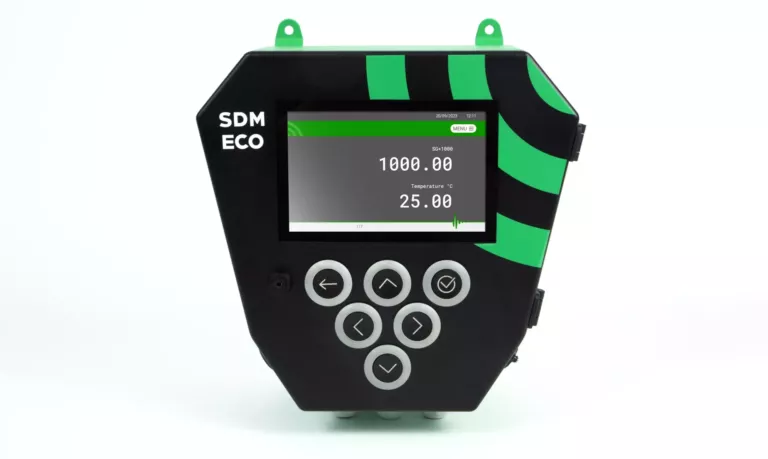
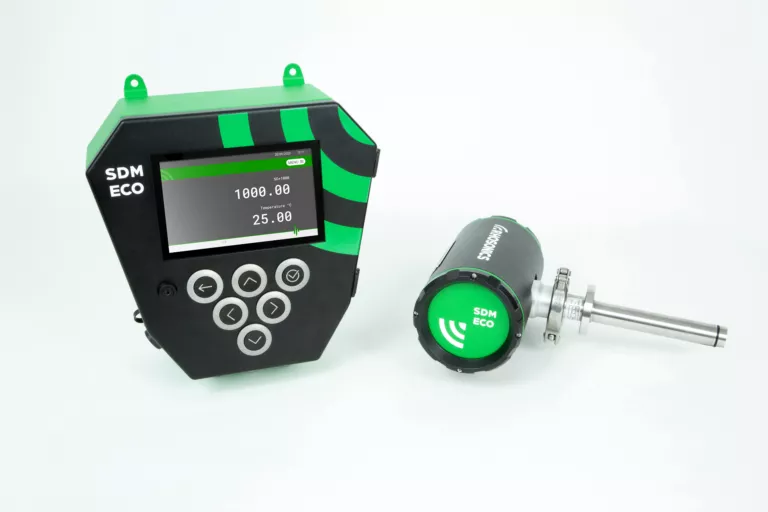
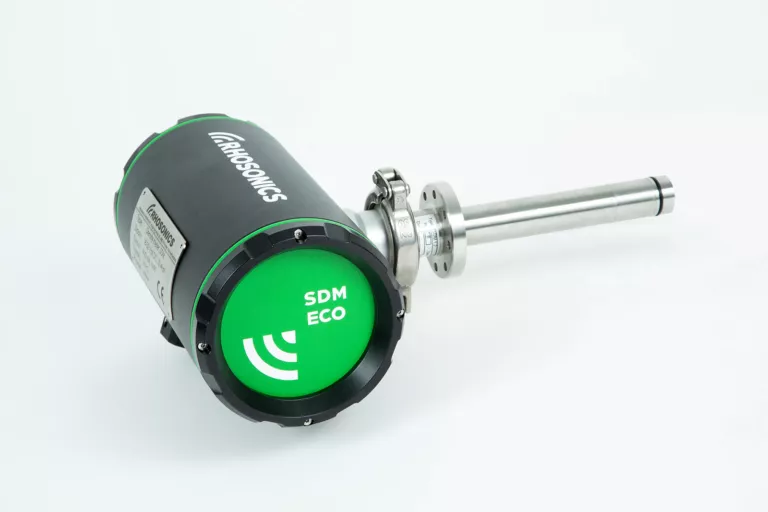
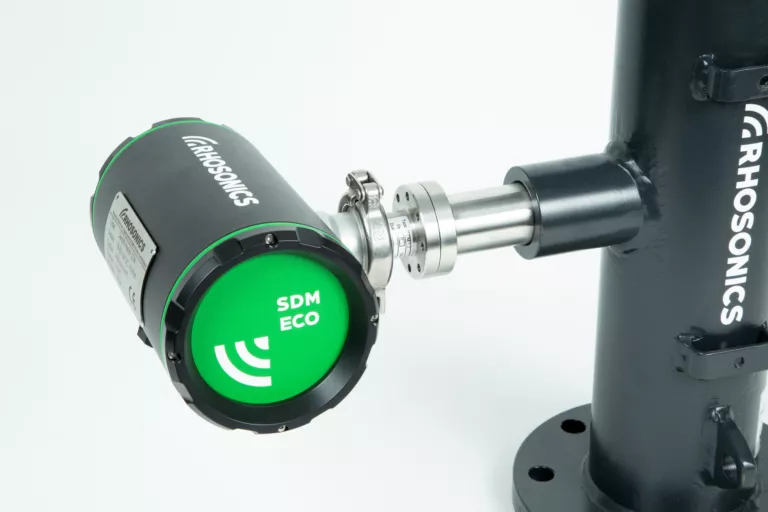
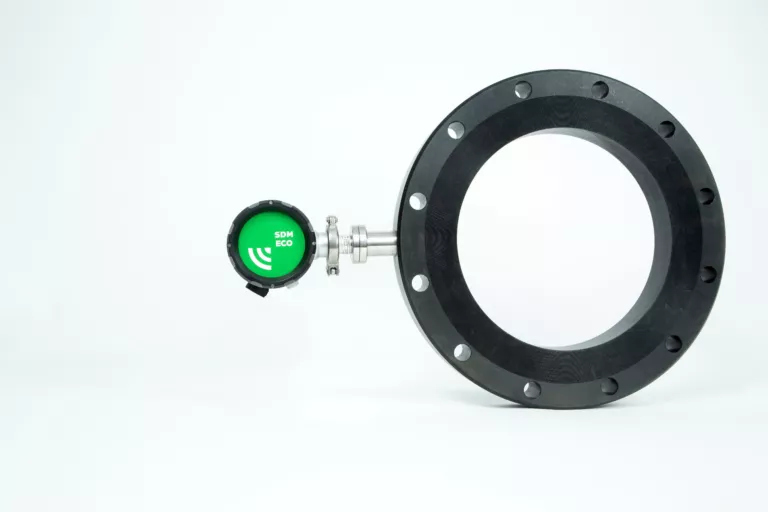
Rhosonics SDM ECO
Non-Nuclear Slurry
Density Meter
Continuous slurry density measurement for better process control and operational visibility.
PRODUCT OVERVIEW
Real-Time Density Measurement Without Radioactive Sources
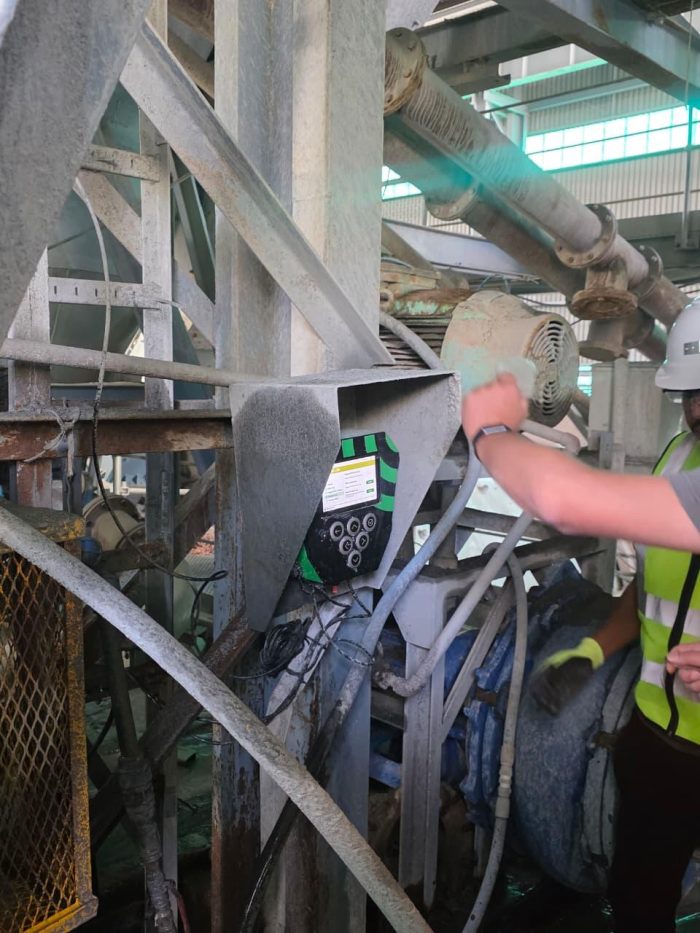
The Rhosonics SDM ECO provides continuous, real-time slurry density measurement using ultrasonic technology. Designed for demanding industrial process environments, it provides reliable density data without the use of a radioactive source.
Continuous measurement gives operators and engineers greater visibility of changing slurry conditions, supporting process monitoring, control and operational decision-making.
Continuous
Real-time density measurement
Non-Nuclear
No radioactive source
Process-Focused
Designed for demanding slurry applications
WHAT PROBLEM DOES IT SOLVE?
WHEN DENSITY CHANGES THE PROCESS CHANGES
Slurry density can change as process conditions change. In mineral processing and other slurry applications, variations in solids concentration can affect downstream performance, making reliable density measurement an important process variable.
Common challenges include:
Variable Slurry Density
Changes in solids concentration can affect downstream process conditions and performance.
Reliance on Manual Sampling
Periodic samples provide a snapshot rather than continuous process information.
Limited Process Visibility
Without continuous density data, changes in slurry conditions can be harder to identify and investigate.
Process Control Challenges
Delayed information can make it harder to respond to changing conditions.
KEY FEATURES & CAPABILITIES
Non-Nuclear Density Measurement
Continuous slurry density measurement without a radioactive source.
Continuous Online Measurement
Provides ongoing density information rather than relying solely on intermittent manual sampling.
Ultrasonic Measurement
Uses ultrasonic technology to measure slurry density through acoustic impedance.
Process Control Integration
Density data can be made available to plant control and monitoring systems, depending on the selected configuration.
Technical Specifications
The exact technical configuration and performance specifications depend on the selected Rhosonics model and application.
Specification
Details
Measurement principle
Acoustic impedance (Power Interface Echo) and Temperature
Measurement variable
Slurry density
Measurement range
700–3000 kg/m³
Accuracy
Up to ±0.5% of reading
Repeatability
0.2 SG × 1000 / 0.1% of reading*
Process temperature
0 °C to +150 °C
Process pressure
1–16 bar at 110 °C; up to 40 bar at 20 °C*
Process integration
Spool-piece, wafer, weld-o-let and clamp-in options*
Pipe size
Dependent on selected process integration system*
Sensor wetted materials
Ceramics, Duplex 2205
Sensor rod material
SS316L
Analog outputs
2 × 4–20 mA
Digital interfaces
Modbus RS485, Ethernet, USB
Data logging
Continuous; retrievable via USB
Display / HMI
7-inch touchscreen
Transmitter protection
IP68, NEMA 6P
HMI protection
IP65, NEMA 4
Ambient temperature
−5 °C to +50 °C
Power supply
Sensor/transmitter via PoE; HMI 18–32 VDC*
Note: Final specifications and configuration should be confirmed against the selected SDM ECO model, process integration system and application conditions.
HOW DOES THE SDM ECO MEASURE SLURRY DENSITY?
Slurry density measurement determines the density of material flowing through a process stream, providing an indication of solids concentration. The SDM ECO uses ultrasonic technology to measure acoustic impedance at the interface between the sensor and the slurry.
The reflected ultrasonic response is used to determine acoustic impedance, which is then used to calculate slurry density, providing continuous density information for process monitoring and control.
Why continuous measurement matters
A manual sample represents the process at a particular moment. An online density meter provides a continuous stream of process information.
This difference can be important where density changes quickly or where maintaining a target solids concentration is important to downstream process performance.


APPLICATIONS & INSTALLATION OPTIONS
The SDM ECO can be applied across a range of slurry and process applications where continuous density information is required. Different installation configurations allow the instrument to be integrated into the process according to pipe arrangement and application requirements.
- Mineral processing
- Thickener applications
- Concentrate handling
- Tailings processes
- Slurry transport
- Grinding circuits
- Flotation circuits
- Process slurry pipelines
The suitability of a particular density measurement solution depends on factors such as slurry characteristics, solids concentration, pipe configuration, flow conditions, temperature, pressure and the required measurement performance.
Why Does Slurry Density Measurement Matter?
Continuous density measurement provides process information that can support process stability, control decisions, troubleshooting and production performance.
Improved Process Stability
Continuous density information helps operators identify changes in slurry conditions and respond before deviations develop into larger process problems.
Better Process Control
Density can be incorporated into monitoring and control strategies, providing a measurable process variable for automated or operator-led adjustments.
Improved Process Visibility
Continuous measurement provides a clearer picture of how slurry conditions change over time compared with periodic manual sampling.
Reduced Manual Measurement
Online measurement can reduce dependence on repeated manual sampling where continuous density information is required.
Support for Maintenance & Reliability
Continuous process data can support troubleshooting and investigation when process conditions or equipment performance change.
Earlier Identification of Process Deviations
Changes in density can provide an indication that upstream or downstream process conditions may have changed.
NON-NUCLEAR VS NUCLEAR DENSITY MEASUREMENT
Radiometric density meters have historically been used in many slurry applications. They use radioactive sources and therefore involve additional requirements associated with radiation management, handling and lifecycle considerations.
The SDM ECO provides an ultrasonic alternative, using acoustic impedance to determine slurry density without a radioactive source
Consideration
Non-Nuclear Measurement
Nuclear Measurement
Radioactive source
No
Yes
Measurement technology
Ultrasonic / acoustic impedance
Radiation-based measurement
Radiation-related management
No radioactive source
Radiation-related requirements may apply
Continuous density measurement
Yes, depending on configuration
Yes
SELECTING THE RIGHT MEASUREMENT APPROACH
THE RIGHT DENSITY MEASUREMENT DEPENDS ON THE APPLICATION
Choosing a density measurement technology should not be based on one specification alone.
Engineers should consider:
- Process characteristics
- Solids concentration
- Flow conditions
- Pipe configuration
- Measurement range
- Required accuracy
- Installation requirements
- Control-system integration
- Maintenance requirements
- Regulatory considerations
- Total cost of ownership
Proplant PCE can help assess the application requirements and determine which measurement approach is best suited to the process.
WHY CHOOSE PROPLANT PCE FOR SLURRY DENSITY MEASUREMENT?
Choosing process instrumentation is an engineering decision.
The right instrument needs to match the process, installation environment, measurement requirements and control strategy.
Proplant PCE combines process control, instrumentation and industrial engineering knowledge to help customers evaluate the application, select the appropriate measurement solution and support its integration into the plant.
Technical Expertise
Our instrumentation knowledge goes beyond individual product specifications to consider how the measurement technology fits the wider process.
Process Control & Integration
Density measurement becomes more valuable when the resulting data can support the plant’s PLC, DCS, SCADA or wider control strategy.
Application-Focused Assessment
We consider process conditions, slurry characteristics, measurement requirements and installation constraints when evaluating the solution.
Engineering Support
From instrument selection through implementation and integration, Proplant PCE can support the engineering requirements of the application.
Frequently Asked Questions
A non-nuclear slurry density meter is an online instrument used to continuously measure the density of slurry without using a radioactive source. The resulting density data can support process monitoring, control, troubleshooting and operational decision-making.
The Rhosonics SDM ECO uses ultrasonic technology to measure acoustic impedance at the interface between the sensor and the slurry. The reflected ultrasonic response is used to determine acoustic impedance, which is then used to calculate slurry density and provide continuous density information for process monitoring and control.
The SDM ECO is designed for demanding industrial slurry applications, including applications where abrasion is a consideration. Suitability depends on the specific slurry characteristics, solids concentration, process conditions, installation configuration and required measurement performance, so the application should be assessed before selecting the instrument.
A slurry density meter should be installed at a measurement point that provides representative process conditions and is appropriate for the instrument’s measurement technology. Pipe configuration, flow conditions, temperature, pressure, solids concentration and accessibility for installation and maintenance should all be considered when selecting the measurement location.
Selection should consider the slurry characteristics, solids concentration, particle properties, temperature, pressure, flow conditions, pipe size and configuration, required measurement range and accuracy, installation arrangement and control-system integration requirements. These factors help determine whether the selected measurement technology is suitable for the application.
A nuclear, or radiometric, density meter uses a radioactive source to determine density, while a non-nuclear meter such as the SDM ECO uses ultrasonic measurement and acoustic impedance. Non-nuclear measurement does not require a radioactive source; however, the suitability of either technology depends on the process, application and required measurement performance.
Yes. The SDM ECO provides process communication and output options that can allow density data to be integrated into plant control and monitoring systems. The specific integration method depends on the selected configuration and the plant’s PLC, DCS or SCADA architecture.
Yes. Proplant PCE can support the engineering assessment involved in selecting and applying slurry density measurement technology. This includes considering the process conditions, measurement requirements, installation arrangement and control-system integration to help determine a suitable solution for the application.
NEED RELIABLE SLURRY DENSITY MEASUREMENT?
The right density measurement solution can provide continuous insight into changing slurry conditions and give your operations team the information needed to monitor and control the process.
Whether you are replacing an existing density meter, evaluating a non-nuclear alternative, improving process monitoring or planning a new instrumentation installation, Proplant PCE can help assess your application requirements and determine a suitable measurement approach.
Talk to Proplant PCE about your slurry density measurement requirements.
Rhosonics SDM ECO Non-Nuclear Slurry Density Meter
The Rhosonics SDM ECO is a non-nuclear ultrasonic slurry density meter providing continuous, real-time density measurement for demanding industrial process applications.
Product SKU: SDM ECO
Product Brand: Rhosonics
Product In-Stock: InStock