DENSITY MEASUREMENT
INDUSTRIAL DENSITY MEASUREMENT FOR PROCESS CONTROL
Reliable density measurement for monitoring slurry conditions, supporting process control and improving visibility across demanding industrial applications.

PROCESS MEASUREMENT
MEASURING DENSITY TO UNDERSTAND THE PROCESS
Density is an important process variable in applications where the concentration or composition of material can influence downstream performance.
In slurry applications, changes in density can indicate changes in solids concentration and process conditions. Reliable density measurement gives operators and engineers a measurable indication of what is happening within the process stream.
For applications where density changes over time, continuous online measurement can provide greater process visibility than periodic manual sampling alone.
WHY DENSITY MEASUREMENT MATTERS
FROM A PROCESS VARIABLE TO ACTIONABLE PROCESS INFORMATION
Density data becomes valuable when it helps the plant understand changing process conditions and respond appropriately.
Process Visibility
Continuous density information helps operators see how slurry conditions change over time rather than relying only on periodic measurements.
Process Control
Density can be used as a measurable process variable within monitoring and control strategies, depending on the plant configuration.
Process Stability
Identifying changes in density can help operators investigate process deviations and maintain more consistent operating conditions.
Troubleshooting
Density trends can provide useful information when investigating changes in upstream or downstream process performance.
Solids Concentration
In slurry applications, density provides an indication of changes in solids concentration within the process stream.
Operational Decision-Making
Reliable process information gives operations and engineering teams a stronger basis for investigating and responding to changing conditions.
NON-NUCLEAR DENSITY MEASUREMENT
A MODERN APPROACH TO CONTINUOUS SLURRY DENSITY MEASUREMENT
Non-nuclear density measurement provides continuous density information without the use of a radioactive source. For industrial slurry applications, this can provide an alternative approach to obtaining reliable process density data while avoiding the requirements associated with radioactive measurement systems.
The Rhosonics SDM ECO uses ultrasonic technology and acoustic impedance to provide continuous slurry density measurement for demanding industrial process applications.
Four advantages of continuous density data:
DATA LIVE PROCESS DATA
NO RADIOACTIVE SOURCE
The SDM ECO measures density using ultrasonic technology rather than a radioactive source.
CONTINUOUS PROCESS MEASUREMENT
Real-time density information provides greater visibility of changing slurry conditions than periodic manual sampling alone.
PROCESS INTEGRATION
Density data can be made available to plant monitoring and control systems, depending on the selected configuration.
APPLICATION-FOCUSED MEASUREMENT
The suitability of the technology depends on slurry characteristics, process conditions, pipe configuration and the required measurement performance.
INDUSTRIAL APPLICATIONS
DENSITY MEASUREMENT ACROSS PROCESS INDUSTRIES
Density measurement can be applied wherever changes in material concentration or slurry conditions are important to process monitoring and control.

01
MINERAL PROCESSING
Monitoring slurry conditions across mineral processing operations.

02
SLURRY TRANSPORT
Measuring density in pipelines transporting process slurry.

03
Grinding Circuits
Measuring density in pipelines transporting process slurry.
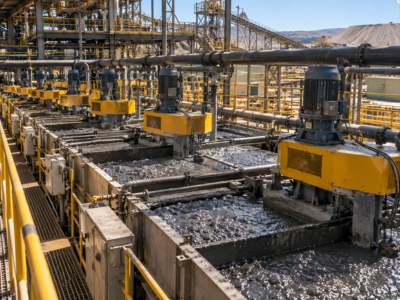
04
Flotation
Measuring density in pipelines transporting process slurry.
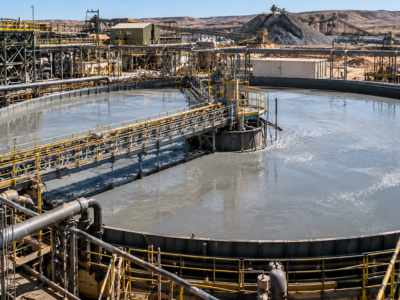
05
Thickening
Measuring density in pipelines transporting process slurry.
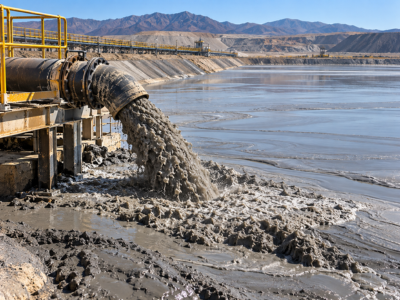
06
Tailings
Measuring density in pipelines transporting process slurry.
07
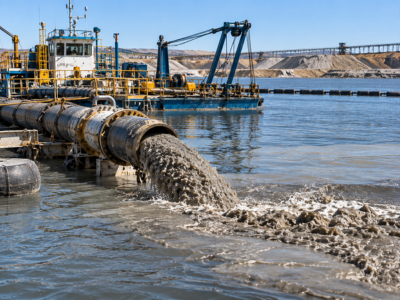
Dredging
Measuring density in pipelines transporting process slurry.
CONTINUOUS PROCESS VISIBILITY
FROM PERIODIC SAMPLING TO CONTINUOUS MEASUREMENT
A manual density sample provides information about the process at a particular point in time.
An online density meter provides a continuous stream of process information, allowing density changes to be monitored and trended as process conditions change.
Why continuous measurement matters
For processes where density changes over time, continuous measurement can provide information that periodic sampling cannot capture between individual measurements.
01 — PROCESS
PROCESS CHARACTERISTICS
Slurry composition, solids concentration and material properties.
FLOW CONDITIONS
Flow behaviour, velocity and process stability.
02 — OPERATING ENVIRONMENT
TEMPERATURE & PRESSURE
Operating conditions at the measurement point.
PIPE CONFIGURATION
Pipe size, installation arrangement and available measurement locations.
03 — MEASUREMENT & INTEGRATION
MEASUREMENT PERFORMANCE
Required measurement range, accuracy, resolution and response.
INTEGRATION REQUIREMENTS
PLC, DCS, SCADA and other plant communication requirements.
04 — LIFECYCLE
INSTALLATION & MAINTENANCE
Accessibility, installation constraints and maintenance requirements.
LIFECYCLE CONSIDERATIONS
Operational requirements, maintenance and cost of ownership.
ENGINEERING CONSIDERATIONS
THE RIGHT DENSITY MEASUREMENT DEPENDS ON THE APPLICATION
Technology selection should be based on the complete process requirement rather than a single instrument specification.
APPLICATION FIT
THE INSTRUMENT SPECIFICATION IS ONLY ONE PART OF THE SELECTION DECISION.
Proplant PCE can help assess these requirements and identify a density measurement approach suited to the process.
WHY PROPLANT PCE
DENSITY MEASUREMENT IS AN ENGINEERING DECISION
Selecting a density measurement solution involves more than choosing an instrument.
The measurement technology needs to suit the process, installation environment, required performance and wider control strategy.
Proplant PCE combines process control, instrumentation and industrial engineering knowledge to help customers evaluate measurement requirements and apply the appropriate technology to the process.
Technical Expertise
Understanding the measurement technology and how it applies within the wider process.
Process Control & Integration
Considering process conditions, slurry characteristics and installation requirements.
Application-Focused Assessment
Connecting measurement data with the plant’s monitoring and control environment.
Engineering Support
Supporting the application from technology selection through implementation and integration.
DENSITY MEASUREMENT FAQ
Frequently Asked Questions
Industrial density measurement determines the density of material within a process stream. In slurry applications, density can provide an indication of solids concentration and changing process conditions.
Slurry density can affect downstream process conditions and performance. Continuous density measurement provides ongoing process information that can support monitoring, control, troubleshooting and operational decision-making.
Nuclear, or radiometric, density measurement uses a radioactive source to determine density. Non-nuclear technologies such as the Rhosonics SDM ECO use ultrasonic measurement and acoustic impedance without a radioactive source.
The Rhosonics SDM ECO uses ultrasonic technology to measure acoustic impedance at the interface between the sensor and the slurry. The measured response is used to calculate slurry density.
Yes. Depending on the selected instrument configuration, density data can be made available to plant control and monitoring systems such as PLC, DCS and SCADA platforms.
Selection depends on factors including slurry characteristics, solids concentration, flow conditions, pipe configuration, temperature, pressure, required measurement performance, installation requirements and control-system integration.
Yes. Proplant PCE can assess the process and instrumentation requirements and help determine a suitable density measurement approach for the application.
NEED DENSITY MEASUREMENT?
LET'S DISCUSS YOUR APPLICATION
The right density measurement solution starts with understanding the process.
Whether you are evaluating non-nuclear measurement, replacing an existing density meter, improving process visibility or planning a new instrumentation installation, Proplant PCE can help assess the application requirements and determine a suitable measurement approach.
Talk to Proplant PCE about your slurry density measurement requirements.