Process and Plant Automation Systems in South Africa
Smarter process control. Greater operational performance.
Proplant PCE designs, programs, upgrades and integrates plant automation and control systems for mines, smelters and process plants in South Africa.
What is process automation?
Process automation is the use of instruments, controllers and software to run a process with little manual intervention.
Our team covers PLC programming including Siemens, SCADA and HMI development, industrial networks, control panels and MCCs, and the industrial instrumentation that feeds them.
Instruments measure the process, a PLC or DCS compares the readings with set points and adjusts valves, drives and motors, and a SCADA or HMI shows operators what is happening and raises alarms.
Plant automation applies the same approach across a whole site, linking individual process areas into one control system.
Modern industrial operations demand consistent production, maximum equipment availability and safe operating conditions.
By integrating instrumentation, PLCs, SCADA systems, HMIs and industrial communication networks, organisations gain the insight needed to make faster decisions, improve consistency and reduce operational risk.
Why process control matters
- Maintain consistent production
- Improve operational visibility
- Reduce manual intervention
- Increase plant reliability
- Improve product quality
- Lower maintenance costs
- Improve energy efficiency
- Reduce downtime
How Proplant PCE supports your operation
Our engineering team combines instrumentation, electrical engineering and automation expertise to deliver complete process control solutions.
Industrial instrumentation
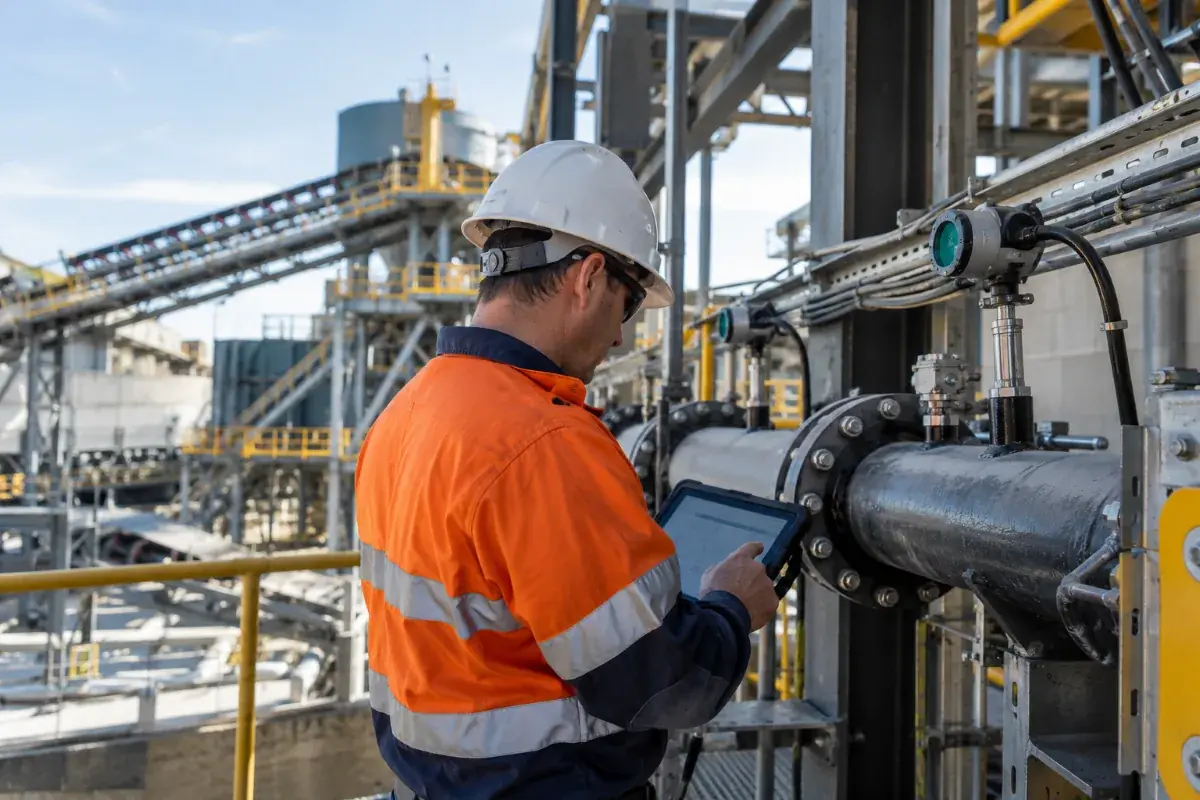
Field instruments measure the physical conditions within a process, continuously monitoring variables such as flow, pressure, level and temperature to provide real-time visibility into plant conditions.PLC & control systems
PLCs and DCS analyse incoming process information, execute programmed control logic and determine the control actions required to maintain stable operating conditions.SCADA & HMI development
SCADA platforms and HMIs give operators real-time visualisation, alarms, historical data, reporting and centralised control of plant operations.Industrial networking
Reliable industrial communication ensures instruments, controllers and supervisory systems exchange information quickly and accurately, so the entire control system operates as one integrated solution.Control panel design & manufacturing
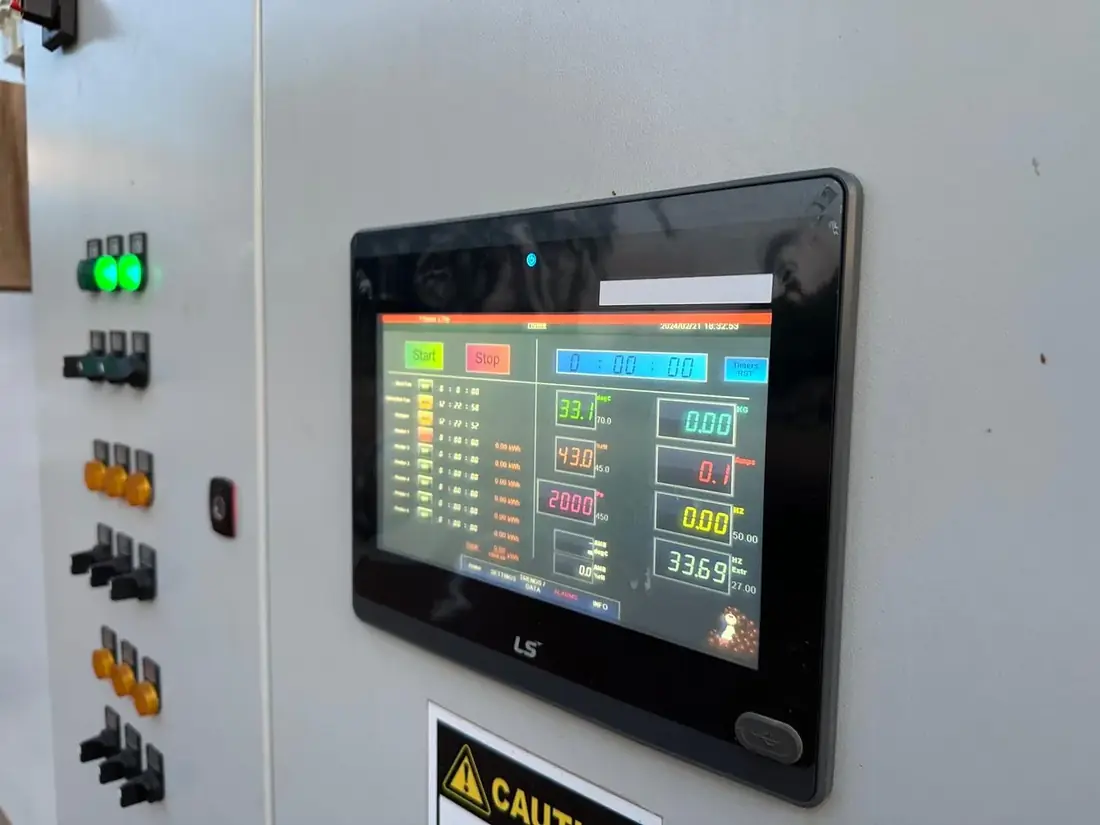
Engineered electrical panels and Motor Control Centres safely distribute power and control electric motors throughout an industrial facility.Commissioning & technical support
Careful testing, commissioning and performance verification ensure systems operate as intended, backed by ongoing technical support as operational requirements change.Successful automation is measured by operational performance, not by the technology installed.
Plant automation and control systems
A plant control system works in layers.
Field layer
Measures the process and acts on it, with transmitters, sensors, control valves and actuators.
Proplant work: selection, supply, installation and calibration.
Control layer
Runs the control logic and interlocks, with PLCs, DCS and standalone PID controllers.
Proplant work: programming, upgrades and integration.
Supervisory layer
Gives operators visibility and control, with SCADA, HMI panels and historians.
Proplant work: screen and alarm development, and reporting.
Network layer
Moves data between the layers, with industrial Ethernet, fieldbus, IO-Link and remote I/O.
Proplant work: network design and integration.
Power and motor control
Distributes power and starts motors, with MCCs, VSDs and control panels.
Proplant work: panel building and MCC manufacturing.
Read more
Each layer has to be specified, built and tested to work with the ones above and below it.
Delivering measurable operational and commercial value
Automated control systems maintain tighter control over critical process variables, reducing unnecessary fluctuations that impact production quality and equipment performance.
Continuous monitoring allows operators to identify abnormal operating conditions earlier, reducing the likelihood of unexpected failures and supporting proactive maintenance planning.
Optimised control strategies reduce process variability, minimise waste and improve throughput while helping facilities make better use of available resources.
Live dashboards, alarms, historical trends and automated reporting enable faster and more informed decision-making.
Early detection of process deviations and equipment issues helps minimise unplanned shutdowns and improve production availability.
Automation reduces reliance on manual intervention in hazardous operating environments while ensuring critical process parameters remain within safe operating limits.
Engineering solutions built around your process
We evaluate existing processes, production requirements, operational challenges and control philosophies to identify opportunities for improved automation, monitoring and process optimisation.
We develop control strategies that maintain stable operating conditions while supporting production efficiency, equipment protection and operational safety.
We integrate instrumentation, control systems and operational software into a unified solution that provides accurate process visibility and dependable control.
We work with plant teams to test, verify and fine-tune system performance for long-term operational success.
We provide ongoing technical support and engineering expertise to help clients adapt their automation systems as operational requirements change.
Better process control leads to better business performance
Successful industrial operations are built on consistency.
Commercial benefits
Effective automation improves overall equipment effectiveness (OEE), reduces production losses, lowers operational costs and helps organisations maximise the return on their capital investments.
Greater process consistency also improves product quality and supports stronger profitability.
Operational benefits
Integrated control systems provide greater visibility across the entire production process, allowing operators to respond quickly to changing conditions while maintaining stable and predictable plant performance.
Reliability benefits
Continuous monitoring and intelligent control reduce equipment stress, minimise unnecessary process disturbances and support longer asset life through improved operating conditions.
Maintenance benefits
Automation systems provide valuable operational data that enables predictive and condition-based maintenance strategies.
Maintenance teams can identify emerging issues before failures occur, reducing emergency repairs and improving maintenance planning.
Safety benefits
Automated control reduces operator exposure to hazardous environments while ensuring critical safety limits are maintained through alarms, interlocks and automated shutdown strategies where required.
Performance benefits
Process Control & Automation Solutions enable facilities to achieve higher levels of production efficiency, process consistency and long-term operational performance, creating a more resilient operation that is better equipped to meet future production demands.
Read more
Every production process relies on maintaining critical operating conditions within acceptable limits. When process variables fluctuate unnecessarily, operations become less efficient, equipment experiences greater stress and production quality becomes more difficult to maintain.
Modern Process Control & Automation systems help organisations achieve greater operational consistency by continuously monitoring plant performance and automatically responding to changing operating conditions before they develop into larger operational issues.
At Proplant PCE, we believe automation should deliver more than technological advancement. It should create measurable improvements in operational performance, reliability and long-term business value.
Process automation controllers
The controller is where measurements become actions.
Programmable logic controllers (PLCs)
PLCs run sequences, interlocks and control loops for a machine, process area or whole plant.
They are widely used in mining and manufacturing plants and connect directly to field instruments, drives and SCADA. Points to check: I/O count, communication protocols, and spares and support for the platform.
Distributed control systems (DCS)
A DCS spreads control across several controllers under one engineering and operator environment.
It suits large continuous processes with many interacting loops. Points to check: engineering effort, licensing and lifecycle cost.
Standalone process controllers and indicators
Panel-mounted PID controllers and process indicators handle a single loop or display, for example a temperature or level loop on a skid.
Points to check: input type, output, alarm relays and communication to SCADA. See the process controllers and indicators in our automation range.
A process control platform your operators can use
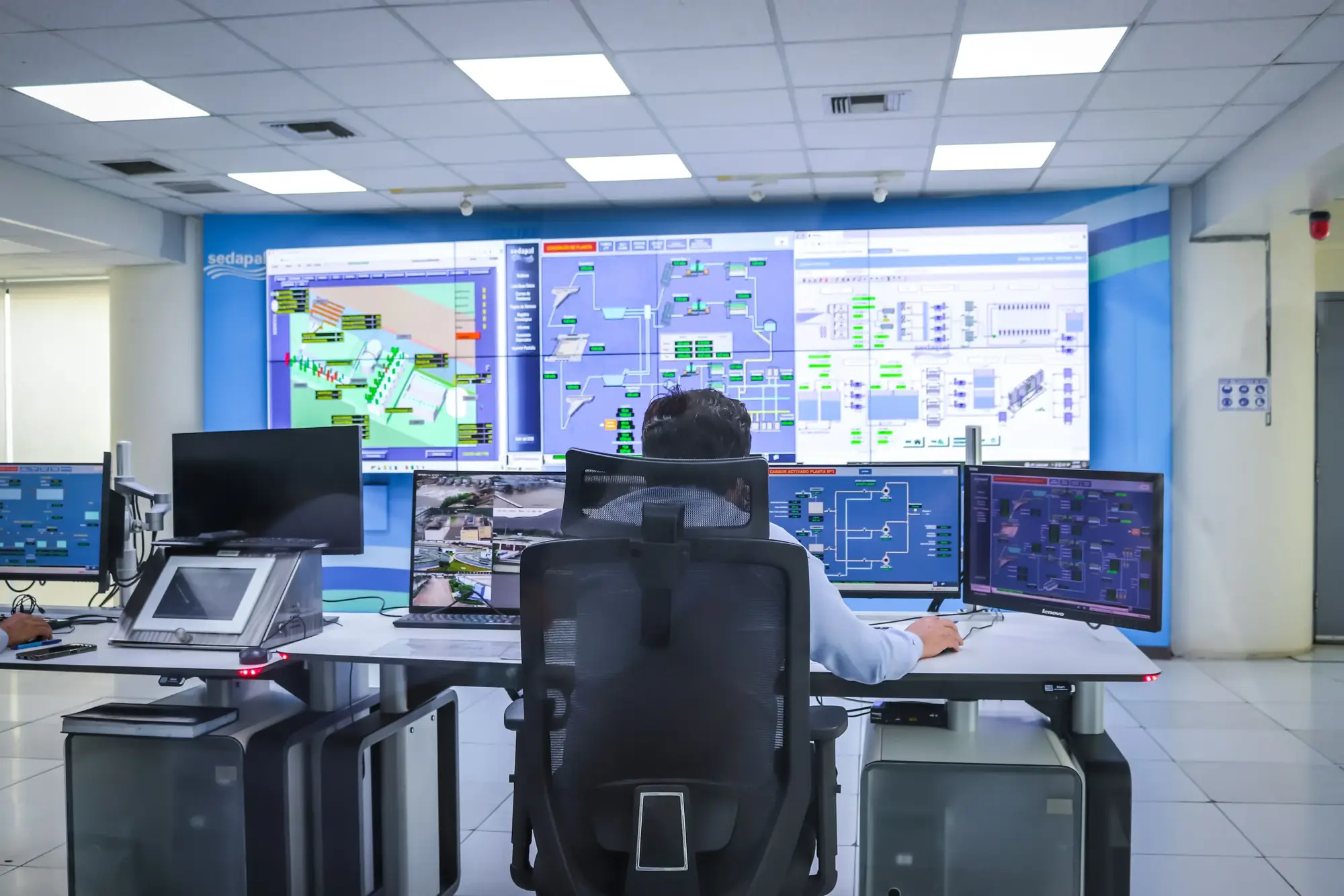
SCADA and HMI software is the process control platform operators work with every shift.
We develop screens, alarms, trends and reports that match the plant layout and the way operators run it, and connect them to the PLCs and instruments underneath. A good platform shows abnormal conditions clearly and keeps alarm numbers manageable.
Read more
Three types cover most process applications, and SCADA gives operators one platform across them.
PLC and SCADA services in South Africa
From new logic to staged upgrades, our PLC and SCADA work is planned around how the plant runs.
Siemens PLC programming and automation
Siemens programming and automation is a core Proplant service.
We write and modify PLC logic, configure HMIs and integrate Siemens controllers with instruments, drives, MCCs and SCADA.
Control platforms we work on
Siemens PLCs with TIA Portal and WinCC, Allen-Bradley PLCs with FactoryTalk, LS Electric PLCs, ODOT remote I/O, and Ignition SCADA.
New logic, modifications and integration are done on the platform already installed on site.
PLC and SCADA upgrades
Many ageing PLC and SCADA systems can be upgraded in stages rather than replaced in one shutdown.
We review the existing hardware, logic and documentation, then plan a migration that keeps the plant running and reduces the risk of lost functionality.
Integration with existing equipment
New automation usually has to work with equipment already on site.
We integrate new controllers and SCADA with existing PLCs, instruments, electrical infrastructure and networks wherever practical.
Installation and commissioning
Installation, loop checking and commissioning of automation systems are covered on our industrial installation and commissioning page.
Plant automation across South African industry
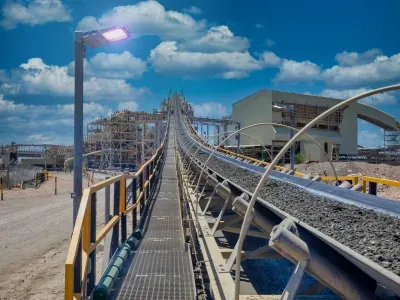
On mines and mineral processing plants, automation controls conveyors, crushers, feeders, pumping, flotation, dewatering and tailings handling.
Mining & mineral processing
Mining facilities rely on automation to improve material handling, crushing, flotation, pumping, dewatering, tailings management and mineral processing while increasing operational reliability in demanding environments.
Manufacturing
Increase production consistency, reduce waste and improve operational efficiency through integrated automation systems.
Water & wastewater
Automation improves treatment consistency, optimises chemical dosing, controls pumping systems, monitors water quality and supports regulatory compliance.
Chemical processing
Maintain accurate process control while improving product quality, operational safety and plant stability.
Food & beverage
Automated control systems improve product consistency, support hygiene standards, optimise cleaning processes and enhance production efficiency.
Energy & utilities
Power generation, water distribution and utility infrastructure rely on automation for remote monitoring, operational reliability and efficient asset management.
Bulk material handling
Automation controls conveyors, silos, crushers, feeders and transfer systems to improve operational efficiency and reduce equipment wear.
General industrial processing
From pulp and paper to cement, metals, agriculture and industrial manufacturing, automation supports safer, more efficient and more reliable operations.
Read more
Typical work includes conveyor interlocks and sequencing, belt scale integration into the PLC, slurry density and level loops, and MCC and VSD control. Each system is designed around how the plant actually runs, including shutdown windows and existing equipment.
Process Control & Automation Solutions are used across virtually every industrial sector where reliable, efficient and repeatable operations are essential.
Proplant PCE supports organisations operating in some of Southern Africa’s most demanding industrial environments. While every industry has unique operational challenges, the objective remains the same: achieving safe, reliable and efficient plant performance.
Your partner in process control & automation excellence
Selecting the right Process Control & Automation partner is about more than choosing a supplier.
Engineering-led solutions
Every automation project begins with understanding the process.
We assess your operational requirements, evaluate existing systems and recommend solutions that improve reliability, efficiency and plant performance rather than simply replacing equipment.
Practical industry experience
Our team understands the operational realities of industrial environments, including mining, manufacturing, water treatment, utilities, chemical processing and food production.
We develop solutions that are technically robust, practical to maintain and aligned with your production objectives.
Integrated process control expertise
We provide solutions that consider the complete control system, ensuring all components work together to achieve stable, reliable operation.
Long-term engineering support
We support our clients beyond project completion through technical guidance, system optimisation, troubleshooting and ongoing engineering assistance.
Read more
It’s about working with an engineering team that understands your processes, your operational challenges and the long-term performance goals of your facility.
At Proplant PCE, we combine technical expertise with practical industry experience to deliver automation solutions that are engineered around your operation, not simply around individual products. Our approach is collaborative, consultative and focused on achieving measurable operational outcomes.
Whether implementing a new control system, modernising ageing infrastructure or expanding an existing facility, our engineers work closely with clients to develop solutions aligned with production objectives, maintenance strategies and operational goals. Every solution is engineered to provide greater control over critical processes, improve efficiency, reduce downtime and support informed operational decision-making across the plant.
Supporting critical industrial processes
Why industrial automation projects fall short
01Poor instrument selection
Even the most advanced automation system cannot perform effectively if unsuitable field instrumentation provides unreliable process data.
02Inadequate system integration
Disconnected systems create information silos, increase maintenance complexity and reduce operational visibility.
03Focusing on equipment rather than process outcomes
Purchasing individual components without considering the overall control philosophy often results in inconsistent performance.
04Lack of operator engagement
Automation systems are only effective when operators understand how to use them efficiently.
05Limited maintenance planning
Ignoring preventative maintenance and system diagnostics can reduce automation reliability over time.
Frequently asked questions
What is the difference between process automation and plant automation?
Process automation controls a specific process, such as a pumping station, flotation circuit or furnace, using instruments, controllers and final control elements. Plant automation links those process areas into one control system for the whole site, usually with a shared SCADA, network and alarm system. Most plants need both.
What is a process automation controller?
It is the device that reads process measurements, compares them with set points and sends commands to valves, drives and motors. The three common types are PLCs, DCS controllers and standalone PID controllers. The right one depends on the size of the process, the number of loops and the systems it must connect to.
Should my plant use a PLC or a DCS?
PLCs suit machines, sequences, interlocks and most plant-wide control in mining and manufacturing. A DCS suits large continuous processes with many interacting loops and a single engineering environment. Many plants combine PLCs with a SCADA system, which gives DCS-style visibility at lower cost.
Do you program Siemens PLCs?
Yes. Siemens programming and automation is one of Proplant’s core services, including new logic, modifications, HMI configuration and integration with SCADA, drives and MCCs.
Which PLC and SCADA platforms do you work on?
Siemens (TIA Portal and WinCC), Allen-Bradley (FactoryTalk), LS Electric PLCs, ODOT remote I/O and Ignition SCADA.
How do PLCs and SCADA systems work together?
PLCs collect information from field instrumentation and execute control logic to manage equipment and processes. SCADA systems provide operators with a centralised interface to monitor, visualise and control those processes while storing historical data, generating reports and managing alarms.
Can old PLCs be upgraded?
Yes. Many ageing PLC systems can be upgraded without replacing the entire control system. Proplant PCE evaluates existing infrastructure and recommends practical upgrade strategies that minimise downtime while improving reliability, maintainability and future scalability.
Can you integrate existing equipment?
Yes. Proplant PCE specialises in integrating new automation systems with existing PLCs, instrumentation, electrical infrastructure and communication networks wherever practical. Our objective is to maximise the value of existing assets while improving overall system performance.
What is SCADA?
SCADA (Supervisory Control and Data Acquisition) is a software platform that allows operators to monitor, control and analyse industrial processes from a central location. SCADA systems display real-time process data, alarms, trends and historical information, enabling operators to respond quickly to changing plant conditions.
How much does automation cost?
The cost of an industrial automation project depends on factors such as plant size, system complexity, equipment requirements, integration needs and project scope. Every facility has different operational requirements, so costs vary significantly between projects. Proplant PCE assesses each application individually and develops engineered solutions that deliver measurable operational value while remaining aligned with the client’s budget and objectives.
Explore our other solutions
Ready to improve your process control?
Whether you’re planning a new automation project, upgrading an existing control system or looking to improve operational performance, Proplant PCE can help.