
Industrial flow measurement for liquids, slurries, gases and steam
Electromagnetic, Coriolis, calorimetric and differential pressure flow instruments, selected for the medium, the pipe and the control system they report to. Supplied, installed and integrated by Proplant PCE.
Flow measurement you can rely on
A flow reading sets dosing rates, batch sizes, pump duty and the figures that go on an invoice. When it drifts, product is lost, chemicals are over-dosed and plant balances stop adding up.
Conductivity, solids, viscosity, temperature, pipe size and the straight run available all decide which flow measurement principle will work.
- Chemicals over-dosedA meter reading low means more coagulant, caustic or chlorine than the process needs.
- Batches out of specificationA few percent on every batch adds up to rework, waste and rejected product.
- Invoices you cannot defendWater, effluent and product sold or charged by volume or mass need a reading both sides trust.
- Pumps and plant at riskA missed low-flow condition lets a pump run dry or a cooling circuit overheat.
What does a small error cost you?
Four ways to measure flow
Pick a principle to see how it works, where it fits, what to check, and which instruments in our range use it.
- How it works
- Coils create a magnetic field across the pipe. The conductive liquid flowing through it induces a voltage at two electrodes, in proportion to its velocity.
- Typically used for
- Water, effluent, slurries, acids and alkalis in full pipes, from small dosing lines to large mains.
- Check before you choose
- The liquid must be conductive, so oils, solvents and gases cannot be measured. The pipe must run full.
- In our range
- ALLMAG 4000 · ALLMAG 5000 IO-Link
- How it works
- The meter vibrates its measuring tubes. Flow twists them through the Coriolis force, and the time shift between inlet and outlet gives mass flow. The vibration frequency gives density.
- Typically used for
- Custody transfer, batching and blending, oils, solvents and chemicals, and slurries where density matters.
- Check before you choose
- Larger sizes are heavy and costly, and the meter must be mounted free of strain and vibration.
- In our range
- Coriolis mass flow meter
- How it works
- A heated probe tip is cooled by the flowing medium. The more flow, the more heat it removes, and the electronics switch at the set point and output the flow velocity.
- Typically used for
- Pump dry-run protection, cooling water circuits, lubrication systems and leak detection.
- Check before you choose
- It monitors flow velocity rather than giving a precise flow rate. Choose the probe length for the pipe.
- In our range
- ALL-005 programmable flow sensor
- How it works
- An averaging pitot tube senses total pressure on its upstream face and static pressure behind it. The difference rises with the square of velocity and a DP transmitter turns it into flow.
- Typically used for
- Air, gas, flue gas and steam in large pipes and ducts, cooling water, and portable flow verification.
- Check before you choose
- Needs straight pipe upstream and downstream, and a DP transmitter matched to the range.
- In our range
- Itabar and deltaflow pitot tubes
Five flow instruments, one spec sheet
Pick an instrument to see the specifications engineers ask for first, and download its data sheet.
ALLMAG 4000 electromagnetic flow meterAllpronix · Full-bore magnetic flow meter
A full-bore magnetic flow meter for water, effluent, slurries and chemicals, in compact or remote versions, with a choice of liners and electrodes.
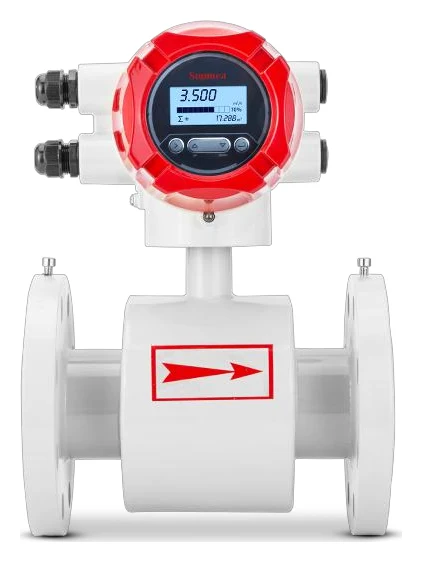
- Sizes
- DN10 to DN2000
- Accuracy
- 0.5% (1.0% version)
- Output
- 4 to 20 mA, pulse, RS485, HART
- Liners
- Neoprene, PU, PTFE, F46, PFA
- Protection
- IP65 compact, IP68 remote
- Supply
- 100 to 240 V AC or 24 V DC
Water and wastewater, mineral slurries, chemicals, food, beverage, pulp and paper.
ALLMAG 5000 IO-Link electromagnetic flow meterAllpronix · Compact and flanged magnetic flow meters with IO-Link
A compact magnetic flow meter with IO-Link, a colour TFT display and two configurable outputs, with batching built in.
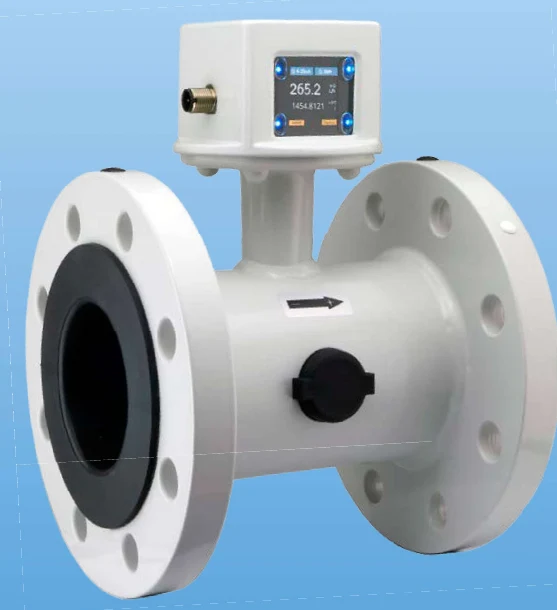
- Models
- MIM threaded G¼ to G2, MIS flanged DN80/DN100
- Range (MIM)
- 0.01 l/min to 650 l/min
- Output
- IO-Link, 4 to 20 mA, 0 to 10 V, pulse, switch
- Accuracy
- MIS < ±(0.5% of reading + 0.3% FS)
- Process
- 16 bar, up to 70 °C
- Supply
- 19 to 30 V DC, IP67
Batching and dosing, water treatment, leak detection, filtration systems and machines.
Coriolis mass flow meterAllpronix · Direct mass flow and density
A direct mass flow meter that also measures density and temperature, with triangular, U-type and straight-tube sensors from DN3 to DN150.
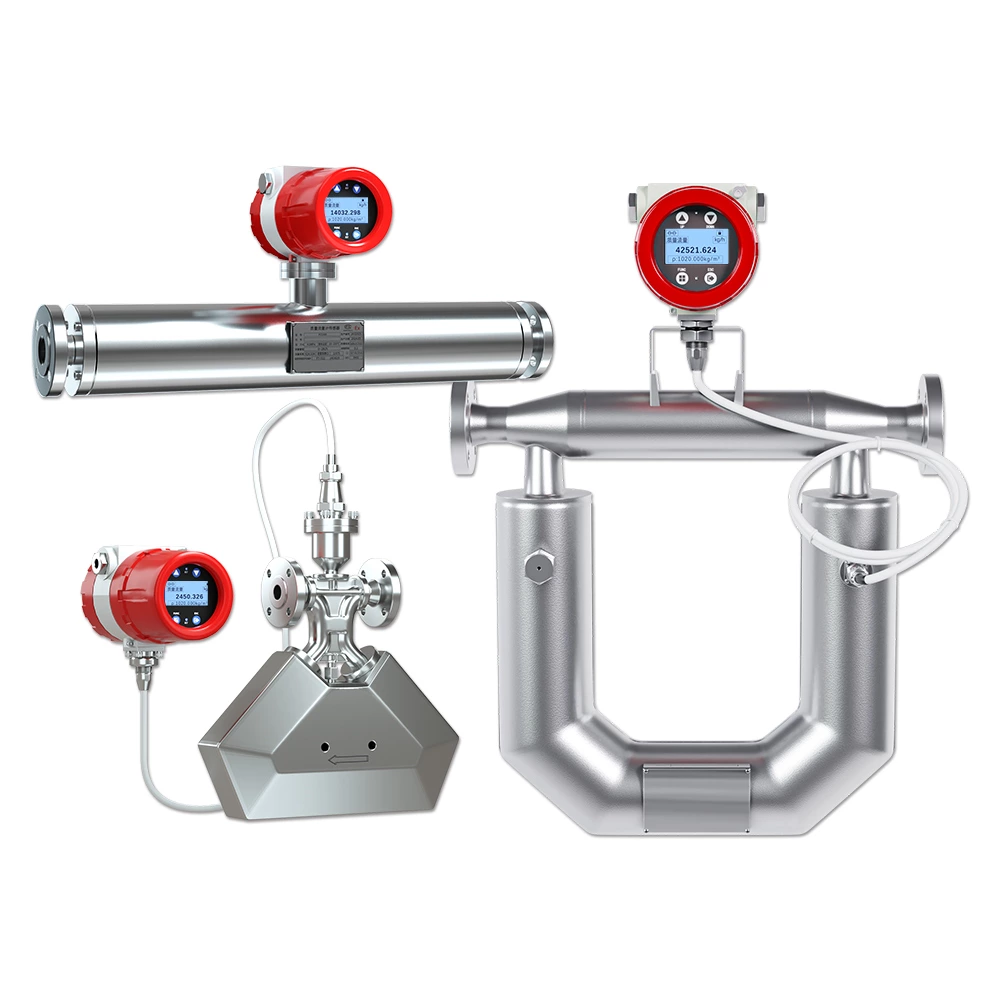
- Sizes
- DN3 to DN150, three sensor shapes
- Accuracy
- Class 0.2 or 0.5; density ±0.002 g/cm³
- Output
- 2 × 4 to 20 mA, pulse, Modbus, HART option
- Medium
- -50 to +200 °C standard, up to 350 °C
- Straight pipe
- Not required
- Supply
- 24 V DC or 220 V AC, IP67
Custody transfer, batching and blending, oils, solvents, chemicals and sanitary lines.
ALL-005 programmable thermal flow sensorAllpronix · Flow and temperature sensor with IO-Link
A wear-free thermal flow sensor for water, glycol, oil and air, with a colour display, two switch outputs, 4 to 20 mA and IO-Link.
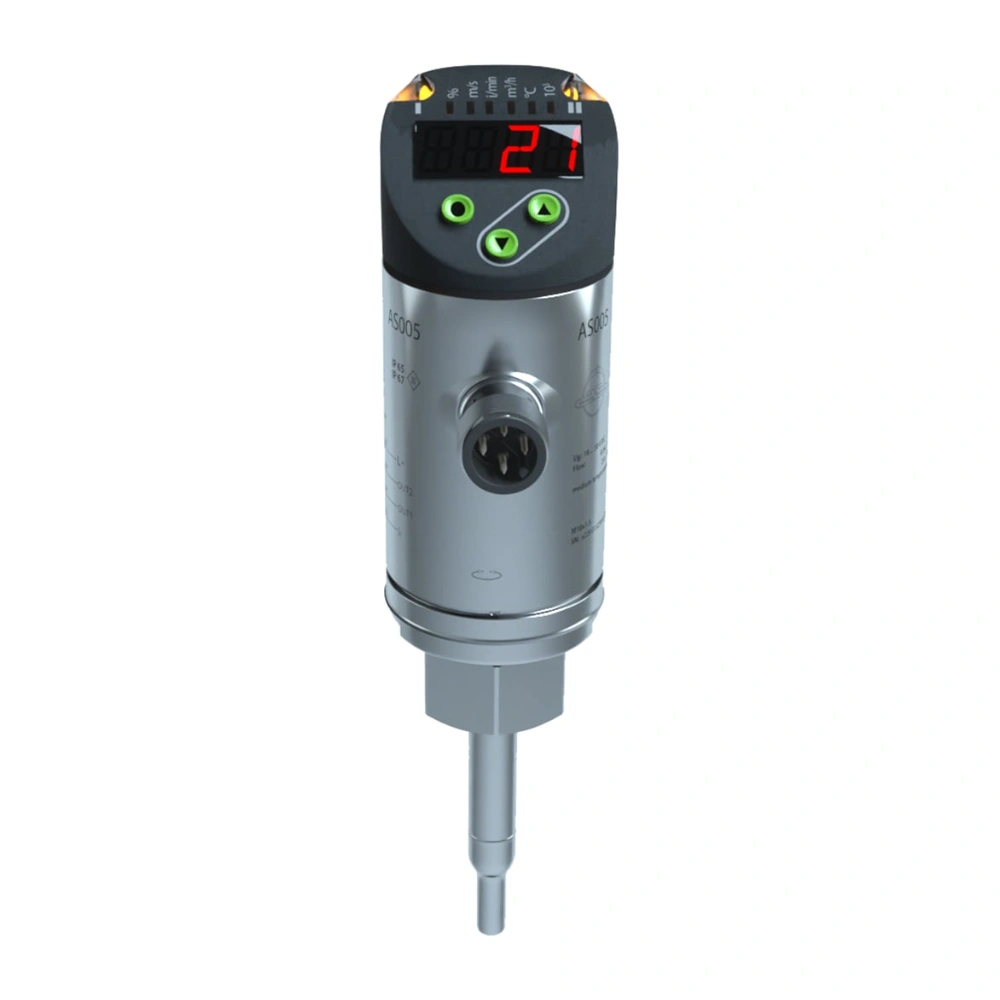
- Range
- 0.04 to 3 m/s liquids, 2 to 100 m/s air
- Process
- -20 to +90 °C, 100 bar
- Output
- 2 × PNP/NPN, 4 to 20 mA, IO-Link
- Connection
- M18x1.5, M12 plug
- Protection
- IP65 / IP67
- Supply
- 18 to 30 V DC
Pump dry-run protection, cooling and glycol circuits, lubrication oil and compressed air.
Itabar and deltaflow pitot flow tubesIntra-Automation · systec · Averaging and portable pitot tubes
Itabar averaging pitot sensors for permanent installation with a DP transmitter, and the portable deltaflow pitot tube for verification.
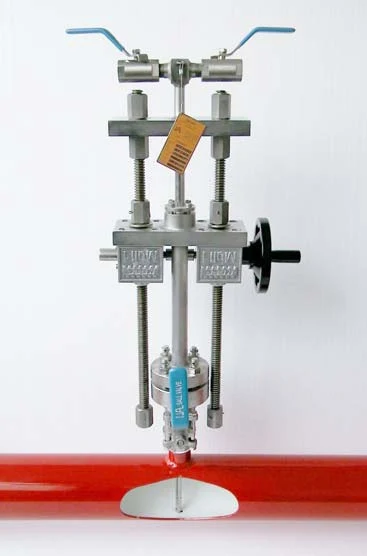
- Pipe sizes
- DN40 to DN12000 (IBF)
- Media
- Gases, steam, liquids
- Accuracy
- ±1% with required straight runs
- Process
- Up to 400 °C, up to PN400 (IBF)
- Signal
- Via the DP transmitter
- Portable
- deltaflow to 8.5 m, up to 1040 °C
Combustion air, gas and steam in large pipes and ducts, cooling water and flow verification.
Compare the range
Swipe the table sideways on a phone.
| Instrument | Principle | Range | Output | Supply | Protection |
|---|---|---|---|---|---|
| Electromagnetic | |||||
| ALLMAG 4000 electromagnetic flow meter | Electromagnetic | DN10 to DN2000, up to 15 m/s | 4 to 20 mA, pulse, RS485, HART | 100 to 240 V AC or 24 V DC | IP65 compact, IP68 remote |
| ALLMAG 5000 IO-Link electromagnetic flow meter | Electromagnetic | 0.01 l/min (G¼) to DN100 flanged | IO-Link, 4 to 20 mA, pulse, switch | 19 to 30 V DC | IP67 |
| Coriolis | |||||
| Coriolis mass flow meter | Coriolis | DN3 to DN150, up to 360 t/h | 2 × 4 to 20 mA, pulse, Modbus, HART | 24 V DC or 220 V AC | IP67 |
| Flow sensor | |||||
| ALL-005 programmable thermal flow sensor | Thermal (calorimetric) | 0.04 to 3 m/s liquids, 2 to 100 m/s air | 2 × switch, 4 to 20 mA, IO-Link | 18 to 30 V DC | IP65 / IP67 |
| Differential pressure | |||||
| Itabar and deltaflow pitot flow tubes | Differential pressure | DN40 up to DN12000 | Via the DP transmitter | Passive sensor | Stainless steel, up to 400 °C (IBF) |
What to tell us so we can recommend an instrument
Send us the medium, pipe details, flow range, process conditions and required output, and our team will recommend a suitable flow instrument.
From selection to a working signal in your control system
A flow meter is only as useful as the signal that reaches the control room. We handle the steps around the instrument as well as the instrument itself.
We check the medium, pipe size, flow range, straight run and output before recommending a meter.
Instruments from the brands on this page, with datasheets and calibration certificates for your engineering file.
Mechanical installation, earthing, cabling and termination by our E&I team.
Signal wiring and configuration into your PLC or SCADA, including IO-Link masters and Siemens systems.
Frequently asked questions
How do I choose the right flow meter?
Start with the medium. Conductive liquids and slurries suit an electromagnetic flow meter; oils, solvents and applications that need mass or density suit a Coriolis meter; gases and steam in large pipes suit an averaging pitot tube. Then check the pipe size, flow range, straight run and output.
What is the difference between a magnetic flow meter and a Coriolis meter?
A magnetic meter measures the velocity of a conductive liquid and calculates volume flow. A Coriolis meter measures mass flow directly, plus density and temperature, and works on non-conductive liquids and gases.
Can a magnetic flow meter measure slurry?
Yes. Mineral and coal slurries are a common duty, using a polyurethane or neoprene liner and suitable electrodes, as on the ALLMAG 4000.
What does IO-Link add to a flow meter?
IO-Link lets the PLC read flow, totals and diagnostics digitally and set the meter up remotely over a standard sensor cable. The ALLMAG 5000 offers IO-Link alongside 4 to 20 mA and switch outputs.
Do I need a flow meter or a flow switch?
A flow meter gives a flow rate and totals. A thermal flow sensor such as the ALL-005 switches when flow is above or below a set point, for pump protection and cooling water monitoring, and also gives a 4 to 20 mA and IO-Link signal.
How much straight pipe does a flow meter need?
It depends on the principle. The ALLMAG 4000 needs 10 × DN upstream and 5 × DN downstream, the ALLMAG 5000 MIM 3 × DN and 2 × DN, and averaging pitot tubes typically 7 D and 3 D or more. Coriolis meters need no straight run for the flow profile in most installations.
Can Proplant PCE help me choose the right flow instrument?
Yes. Send us the medium, pipe size, flow range, process conditions and required output, and our team will recommend a suitable instrument.
Do these instruments connect to a PLC or SCADA?
Yes. Depending on the model, outputs include 4 to 20 mA, pulse, relays, HART, RS485 and IO-Link. Tell us what your control system accepts and we will match the output.
Let’s discuss your flow application
Tell us what is flowing, the pipe it flows in and what the signal needs to do. We will come back with a recommendation and the datasheet.